|

|
|

|

|

Fun and Faith: Ideas for a Bible-Themed Children’s Event
Planning a Bible-themed children’s event can be one of the most rewarding ways to bring faith, fun and community together. Children learn best when they are engaged, active and enjoying themselves, which is why a well-planned event can do far more than simply fill an afternoon. It can help children remember Bible stories, build friendships, feel welcomed in a church or family setting, and connect positive memories with faith.
Whether you are organising a church family day, a holiday club, a children’s ministry event, a Sunday school celebration, or a neighbourhood outreach programme, a Bible-themed event can be both meaningful and exciting. The key is to strike the right balance. You want children to have fun, but you also want the event to reflect Christian values, biblical teaching and a sense of purpose. That does not mean everything has to be formal or quiet. In fact, some of the most successful faith-based children’s events are lively, creative and full of laughter.
A strong Bible-themed event can include games, music, storytelling, craft activities, food, interactive learning stations, Bible maps, outdoor play, and even a Bible-themed jumping castle if the setting allows. The point is not simply to entertain children, but to create an environment where joy, learning and faith can grow together.
Start with a clear purpose
Before choosing decorations, activities or themes, it helps to decide what kind of event you want to create. Is it a church outreach event for families in the local community? Is it a smaller event for children already involved in Sunday school or a Christian club? Is it designed mainly for teaching, for celebration, or for relationship-building?
Once the purpose is clear, planning becomes much easier. A church outreach event may need activities that are welcoming for children who know very little about the Bible. A Sunday school celebration might include more detailed storytelling and memory verses. A holiday club may need enough variety to keep children engaged over several hours or several days.
When the purpose is clear, the event feels more organised and more meaningful. Every activity can then support the overall goal, rather than feeling random.
Choose a simple Bible-based theme
A Bible-themed event works best when the theme is easy for children to understand. The aim is not to impress adults with complexity. It is to create a theme that is fun, memorable and suitable for a wide age range.
There are many strong options:
- Noah’s Ark
- David and Goliath
- Jonah and the Big Fish
- Moses and the Exodus
- The Good Samaritan
- The Fruits of the Spirit
- The Armour of God
- Jesus Calms the Storm
- Parables of Jesus
- Bible Lands Adventure
You do not need to force every activity to match the theme perfectly. It is enough if the theme provides a clear direction for the event. For example, a Bible Lands Adventure theme could include a Bible map activity, travel-style decorations, storytelling stations and treasure-hunt style games. A Noah’s Ark theme could include animal crafts, water-themed activities, songs and lessons about trust and obedience.
For a kids Bible map website, a Bible lands or Bible journey theme is especially strong because it gives natural room for map-based learning. Children often enjoy seeing where Bible stories happened, especially when maps are made simple, colourful and interactive.
Make Bible learning active, not just passive
One reason children lose focus at some events is that too much time is spent listening and not enough time doing. Children usually remember things better when they move, build, draw, act or explore.
Instead of relying only on a talk, think in terms of activity stations. One station could be storytelling. Another could be a Bible map challenge. Another could be a craft table. Another could be a game. Another could be a snack corner. Rotating children through activities keeps energy up and allows different learning styles to shine.
A Bible map station can be especially effective. Instead of only telling children that Moses led the Israelites out of Egypt, you can show them where Egypt was, where the Red Sea was, and where the journey continued. Instead of simply mentioning Jesus’ ministry, you can point out Bethlehem, Nazareth, Jerusalem and Galilee on a child-friendly map. This helps make the Bible feel more real and grounded in actual places.
Children often enjoy asking questions like:
- Where did this happen?
- Was it far away?
- Did people walk there?
- Is that place still there today?
These simple questions can open the door to deeper interest in Scripture.
Use storytelling in a lively way
Storytelling should be one of the centrepieces of the event, but it does not have to mean standing still and reading from a page in a flat voice. A good storyteller uses expression, questions, props and movement.
For younger children, simple language and repetition work well. For older children, you can ask reflective questions and invite them to think about what the story means in everyday life.
You can also make storytelling more interactive by including:
- simple costumes
- role play
- puppets
- picture cards
- themed objects
- large printed maps
- sound effects or music
For example, if you are telling the story of Jonah, children can join in by pretending to board a ship, act out the storm, or help point to Nineveh on a map. If you are telling the story of David and Goliath, children can talk about courage, fear and trusting God.
The best storytelling sessions are not too long. They hold attention, create curiosity and leave children with one or two clear truths they can remember.
Include games that support the theme
Games are one of the easiest ways to make a Bible-themed event enjoyable, but the best games are those that fit naturally into the day rather than feeling disconnected from it.
For example:
- A Bible treasure hunt with clues based on stories or places
- Relay races linked to “journeys” in the Bible
- Animal matching games for a Noah’s Ark theme
- Giant obstacle challenges for David and Goliath
- Boat-themed activities for Jesus calming the storm
- Map puzzles where children locate Bible towns or regions
These do not need to be complicated. Children are usually happy with simple, energetic games if they are well organised and age-appropriate.
A Bible map treasure hunt can work particularly well for a faith-based children’s event. Children can be given clues that lead them to different “Bible lands” stations around the venue. At each station, they learn a fact, answer a question or complete a challenge. This turns learning into an adventure.
Craft activities add meaning and calm
After energetic games, craft activities are a good way to slow the pace and allow children to focus. Craft tables also give quieter children a chance to engage in a comfortable way.
Depending on the theme, ideas could include:
- colouring Bible maps
- making shields for the Armour of God
- creating paper fish for Jonah
- building mini arks
- decorating memory verse cards
- making travel passports for Bible lands journeys
- drawing scenes from the day’s Bible story
Crafts do not need to be expensive or elaborate. What matters more is that they are simple enough to complete successfully and meaningful enough that children want to take them home.
A take-home item can help continue the lesson after the event. Parents may ask about it, and children may remember the story because they created something linked to it.
Music helps create atmosphere
Children’s events often feel more joyful and welcoming when music is included. Songs can be used at the beginning, between activities or as part of a group session.
Choose songs that are easy to sing, upbeat and suitable for the age range. Action songs are especially useful because they help children move and stay involved. For church-based settings, songs about God’s love, joy, faithfulness and trust can tie in beautifully with the day.
You do not need a full concert-style setup. Even simple music played through speakers, combined with a cheerful leader, can lift the whole atmosphere.
Think carefully about food and breaks
Food is often part of a successful children’s event, but it should be managed well. Keep things practical, safe and easy to serve. If the event is short, snacks and water may be enough. If it is longer, you may need a fuller refreshment plan.
Simple child-friendly options are often best. Avoid overcomplicating the menu. It is also important to think about allergies, hygiene and supervision.
Breaks matter too. Children need natural pauses in the day. If the programme is packed too tightly, children become tired and restless. A good event includes active periods, quieter moments, refreshment breaks and some flexibility.
A jumping castle can fit naturally into the event
A jumping castle can work very well at a Bible-themed children’s event, especially for a church family day, outreach event, community celebration or holiday club. The important thing is to see it as one part of the day, not the main message.
Children love active play, and a jumping castle gives them a chance to release energy and enjoy the event in a memorable way. It can help create a joyful, welcoming environment for families, especially at outdoor events. For churches and family ministries, this can be a practical way to attract attendance and make the atmosphere warm and inviting.
The key is to keep it in perspective. The jumping castle should support the event, not replace the faith content. It works best when combined with structured teaching, themed activities, Bible storytelling and family engagement.
Safety is essential. If you include a jumping castle, make sure it is hired from a reputable provider, set up correctly, supervised properly and used according to age and capacity rules. Children should be grouped sensibly by size and age where possible, and adults should not treat it as a completely hands-off activity. A safe, supervised jumping castle can add a lot of excitement without distracting from the overall purpose of the day.
It can even be included under a broader event message such as joy, celebration, fellowship or welcoming families. That makes it feel natural rather than forced.
Use Bible maps as a special feature
For a kids Bible map website, this is where your event can stand out.
A Bible map feature is not only educational, but also highly visual and engaging. Many children hear Bible names without really understanding that these were real places connected by journeys, landscapes and regions. A good Bible map activity can make Scripture feel more concrete.
Some ideas include:
- a giant floor map where children stand on locations
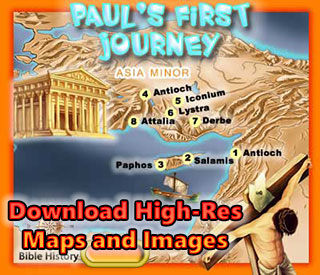
- a map trail showing the journeys of Paul or Moses
- printable map worksheets
- “find the place” challenges
- Bible lands passport stamps
- story stations connected to places like Bethlehem, Nazareth, Jerusalem and Jericho
You can also build the whole event around the idea of exploring the world of the Bible. Children can “travel” from one station to another, collecting clues, learning stories and discovering where important events happened. This can be especially appealing because it combines movement, imagination and learning.
For marketing purposes, this kind of activity also gives your website a natural role. Instead of being only a background brand, the Bible map website becomes a useful resource connected to the event itself.
Create a welcoming environment for families
Children do not attend events in isolation. Parents, carers and families shape whether the event feels trustworthy and worthwhile. That is why the atmosphere matters so much.
A welcoming event includes:
- clear signage
- friendly volunteers
- clean areas
- organised registration
- easy-to-understand schedules
- visible safety measures
- a calm and cheerful tone
Parents appreciate knowing what the event is about, what their children will be doing and who is supervising. If families feel comfortable, they are far more likely to stay engaged, return in the future or recommend the event to others.
This is especially important for outreach events where some families may not usually attend church. A warm, respectful and well-run environment can leave a powerful impression.
Think about age groups
Not every activity suits every child. A good Bible-themed event recognises that a five-year-old and an eleven-year-old often need different levels of challenge and attention.
You do not always need to separate groups completely, but it helps to plan with different ages in mind. Younger children often enjoy simple songs, colouring, short storytelling and basic games. Older children may respond better to challenges, role play, map quests, competitions and more thoughtful discussion.
Even within one event, you can provide levels of flexibility so children are not bored or overwhelmed.
Use the event for gentle outreach
A Bible-themed event can be a meaningful way to reach children and families who would not normally engage with Christian teaching. But outreach works best when it feels sincere, not manipulative.
The goal is not to hide the Christian nature of the event. It is to create something genuinely welcoming, enjoyable and valuable. Families should feel that they were invited into a joyful and respectful environment where children were cared for and encouraged.
When the event is planned well, children go home remembering the fun, the stories, the kindness of the leaders and the positive feeling of the day. That alone can open the door to deeper faith conversations later.
Promote the event well
Even the best event needs good promotion. Use language that is inviting and clear. Explain the theme, the activities, the age range, the location and whether it is free or ticketed.
Good promotion channels may include:
- church announcements
- local community groups
- school networks where appropriate
- social media
- posters
- email newsletters
- your kids Bible map website
Your website can play an important role not only in promoting the event but in supporting it with helpful content. You could publish a blog post introducing the theme, share printable resources, explain the Bible map activity, or offer a guide for parents about what children will learn. This helps the event feel more substantial and gives families another way to connect with your content.
End with a clear takeaway
Children’s events are most effective when they leave children with one clear message. That message could be:
- God is with us
- Jesus cares for people
- God keeps His promises
- Faith can be joyful
- We can trust God in hard times
- Kindness matters
- God’s story is real and meaningful
You do not need children to remember everything. If they leave remembering one strong truth, one Bible story and one positive experience, that is already valuable.
A short closing session can help. This could include a final song, a simple prayer, a brief recap and perhaps a take-home item such as a map sheet, memory verse card or small craft.
Making Bible Themed Events Memorable for Children
A Bible-themed children’s event can be much more than a day of games. When planned thoughtfully, it becomes a space where children can laugh, play, learn and encounter faith in a warm and memorable way. The best events are not those that try to be impressive for the sake of appearances. They are the ones that combine joy, care, creativity and biblical truth in a way children can understand.
Fun and faith do not compete with each other. In many ways, they work best together. A well-run event can show children that learning about the Bible is not dull or distant. It can be active, meaningful, welcoming and full of life.
By combining storytelling, games, crafts, music, Bible maps, family-friendly planning and even a supervised jumping castle, you can create an event that serves both children and families beautifully. For a kids Bible map website, this kind of content is especially powerful because it connects biblical learning with practical event ideas that parents, churches and children’s leaders can actually use.
In the end, the goal is simple: create an experience where children feel joy, feel welcome, and come away with a stronger connection to the stories and truths of the Bible. That is the kind of event people remember, and the kind of ministry that can have a lasting impact.
Tags: Teaching Bible history Bible study Kids Learning Interactive Bible Study Youth Bible Teaching Jumping Castle Bible Crafts Family Outreach Bible Games Kids Ministry Bible Maps Sunday School Bible Themes Faith Fun Bible Kids Event
Kid's Bible Maps
Bible History Online
The Geography of the Bible
© Bible History Online (https://bible-history.com)
Made by Network Local
Kids Bible Maps
About
Us
Contact Us
To
Parents
To
Teachers
Kids Bible Blog
Using Our Maps
Mission
Statement
Doctrinal
Statement
Instructions
Popular Bible Maps
The Journey of Abraham
Moses and the Exodus
Joshua and the Land
The Kingdom of David
The Kingdom of Solomon
Israel in Jesus' Time
Paul's First Journey
The Land of Israel
The Land of Egypt
The Land of Assyria
The Land of Babylon
The Land of Persia
The Land of Greece
The City of Rome
Noah's Ark and Mt. Ararat
The Tower of Babel
The Old Testament World
The New Testament World
Ancient Empires
Moses and the 10 Plagues
Ancient Peoples
The 10 Commandments
The 12 Tribes of Israel
The Ministry of Jesus
Bible Stories with Maps
Daniel in the Lions Den
David and Goliath
Baby Moses
Jesus and the Little Children
Coloring Book Images
Coloring Book
Donkey
Camel
Lamb
Noah's Ark
Noah's 3 Sons
Abraham
Sheep
Lion